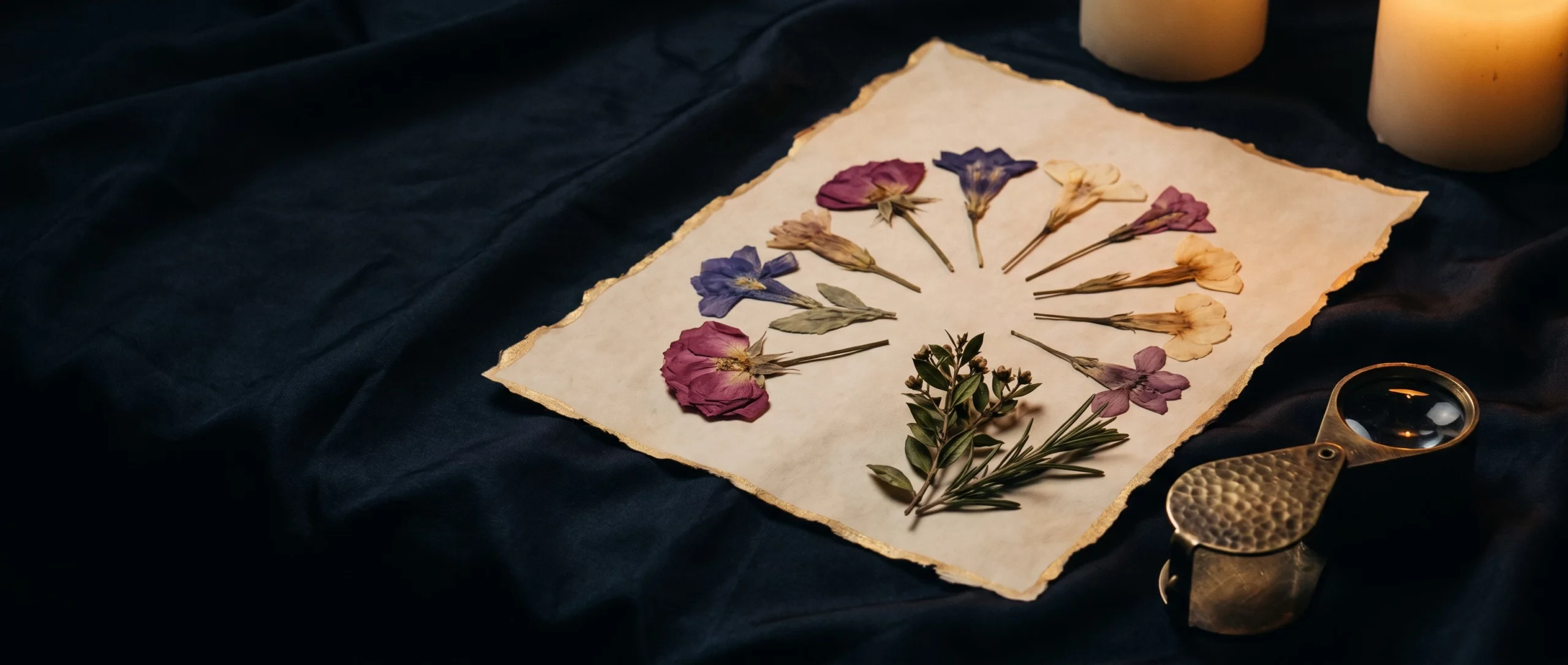
Your birth flower by month is the bloom traditionally linked to your birth month — carnation for January, rose for June, marigold for October. Each one carries a meaning drawn from Victorian floriography, the coded “language of flowers” used to send messages a spoken sentence couldn’t.
Here’s the complete list, what each flower is believed to say, and how brides fold their birth flower — and their partner’s, and their wedding month’s flower — into a single bouquet that means something.
The Full Birth Flower List
| Month | Birth flower(s) | Traditionally means |
|---|---|---|
| January | Carnation, snowdrop | Devotion, admiration, hope |
| February | Violet, primrose | Faithfulness, modesty, young love |
| March | Daffodil | New beginnings, rebirth, unequaled love |
| April | Daisy, sweet pea | Innocence, loyal love, blissful pleasure |
| May | Lily of the valley, hawthorn | Sweetness, return of happiness, humility |
| June | Rose, honeysuckle | Love, devotion, lasting bonds |
| July | Larkspur, water lily | An open heart, positivity, first love |
| August | Gladiolus, poppy | Strength of character, remembrance |
| September | Aster, morning glory | Wisdom, affection, love in return |
| October | Marigold, cosmos | Warmth, creativity, deep devotion |
| November | Chrysanthemum | Loyalty, honesty, cheerfulness |
| December | Narcissus, holly | Good wishes, self-respect, protection |
Most months have a primary flower (bold in tradition) and a secondary. June’s rose and October’s marigold are the two most widely recognized.
Where Birth Flower Meanings Come From
The meanings aren’t random. They come from floriography — the Victorian practice of assigning sentiments to flowers so a bouquet could carry a private message. A suitor sending yellow roses meant something different from red. A daffodil said new start. Chrysanthemums, in much of Europe, still carry a funeral association; in the US and East Asia they read as loyalty and long life.
Birth-month assignments came later, systematized by florists and greeting-card companies in the 20th century, borrowing the floriography meanings that already existed. So your birth flower’s meaning is really a floriography meaning attached to a calendar slot.
For Brides: the Three-Flower Bouquet
A bride’s bouquet is one of the few places she can hide a full sentence in plain sight. The common structure:
- Her birth flower — worked into the bouquet or pinned to the ribbon.
- Her partner’s birth flower — usually a single stem, sometimes in the boutonnière instead so the two flowers “meet” at the altar.
- Her wedding month’s flower — the bloom for the month she’s marrying in, chosen for the marriage rather than either person.
- A remembrance flower — gladiolus or poppy (August), or a late loved one’s own birth flower, often as a charm or a single dried stem.
Season matters: a January bride can’t get peonies, but she can get her carnation. Choosing by birth flower rather than by trend also tends to keep costs down, because you’re not chasing whatever is fashionable that year.
A worked example
An April bride (daisy — innocence, loyal love) marrying in September (aster — wisdom, love in return), whose partner is a June baby (rose — devotion): her bouquet leads with daisies, has a few asters woven through for the marriage, and one deep-red rose at the centre for her partner. Tucked into the ribbon: a single sprig of rosemary for her grandmother. The whole thing reads, in floriography, as loyal love, deepening into wise devotion, remembering where I came from — and it works whether or not a single guest can decode it.
Build your bouquet by meaning, not by trend, with the free Bouquet Intentions — pick the intentions you want your flowers to carry (love, protection, new beginnings, remembrance) and it returns a flower list with the real floriography meaning behind each one, plus your birth flower woven in.
Quick Uses for Your Birth Flower
- Pressed into the invitation suite or printed as a motif on the menu and place cards.
- As the bridesmaid flowers — each bridesmaid carries a single stem of her own birth flower.
- Tattooed or embroidered — birth flower designs are a popular subtle wedding-anniversary marker.
- In the cake design — sugar flowers keyed to the couple’s two birth months.
Frequently Asked Questions
What is my birth flower?
It’s the flower assigned to your birth month on the list above — for example, an April birthday is the daisy or sweet pea, a September birthday is the aster or morning glory. Months with two flowers give you a primary (older, more traditional) and a secondary option.
Why does my birth month have two flowers?
As with birthstones, florists and stationery companies added second options over the years for availability and variety. The first flower listed is usually the older, more traditional assignment.
What is the rarest birth flower?
Lily of the valley (May) is the hardest to source commercially — its season is short and it wilts quickly out of water, which is part of why it’s associated with fleeting sweetness and why it commands a premium in bridal work.
Can I use my birth flower if it’s out of season for my wedding?
Often yes, as a single accent stem, a silk or dried element, or a printed motif even when a full bouquet of it isn’t possible. Your florist can tell you what’s realistic for your date.
Is a birth flower the same as the language of flowers?
They overlap. Birth flowers borrow their meanings from floriography (the language of flowers), but floriography covers hundreds of blooms and colors, not just the twelve monthly ones.
Do birth flowers vary by country?
Yes, a little. The list above is the common US/UK version. Some countries have different monthly assignments (and different cultural meanings for the same flower — the chrysanthemum being the clearest example). If your wedding blends two cultures, it’s worth checking both lists.
What if I don’t like my birth flower?
Use the secondary option for your month, or lean on your wedding-month flower and your partner’s instead. The three-flower structure means your own birth bloom can be a small accent rather than the whole bouquet if it’s not to your taste.
A Bouquet Can Hold a Whole Sentence
Your birth flower is one word in a longer language. On your wedding day you get to write a short sentence with it — your flower, your partner’s, and the bloom for the marriage itself, arranged so the meaning is there whether or not your guests can read it.
Start with what you want it to say: open the free Bouquet Intentions, choose your intentions, and get a flower list with the floriography meaning behind each stem.