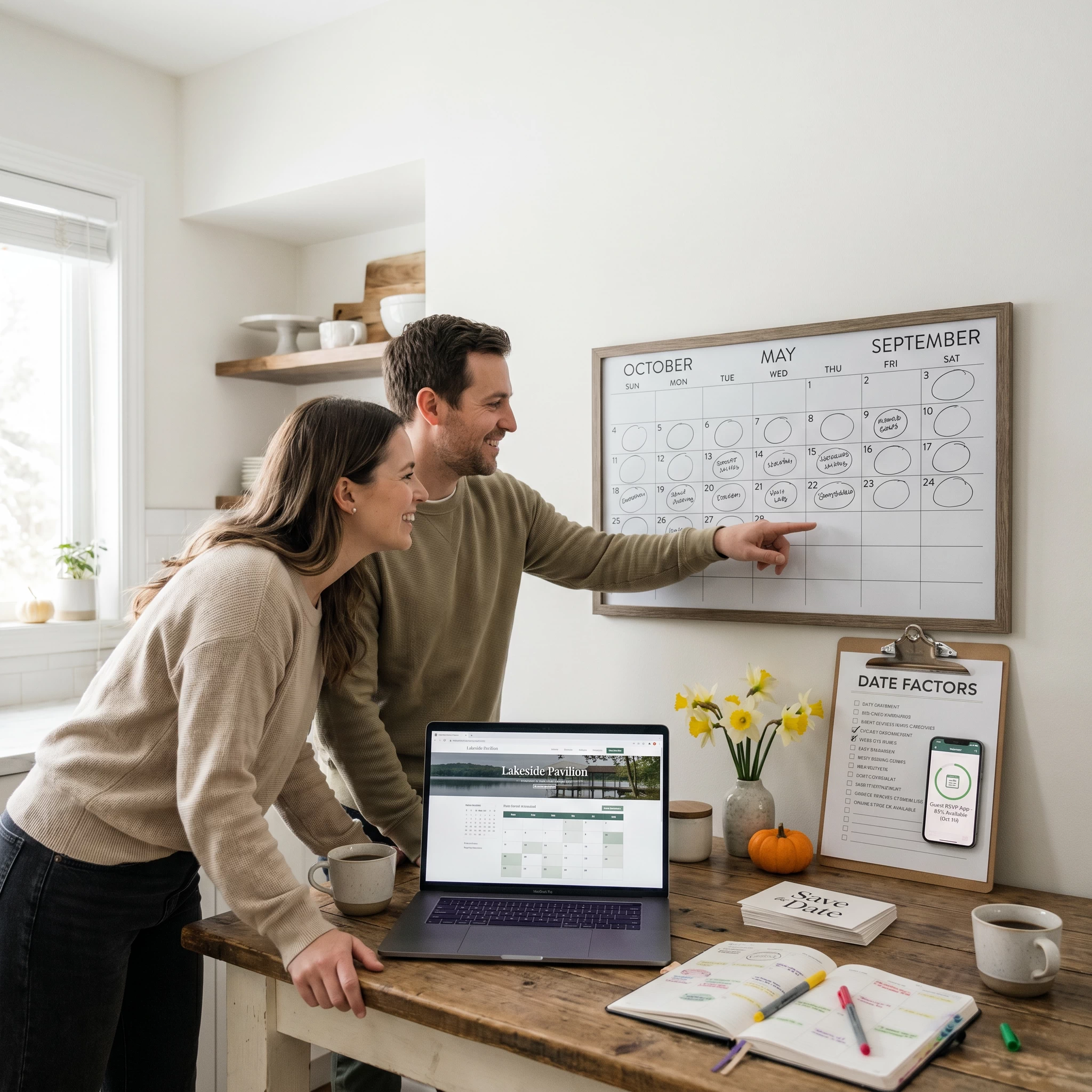
The wedding date you pick ripples through every other decision you’ll make. It determines your venue options, your budget, which vendors are available, what the weather will likely be, and which guests can actually make it.
Getting it right from the start saves a lot of work later; getting it wrong sets off a chain reaction that’s expensive and exhausting to fix. This guide walks through every factor worth weighing when you’re working out how to pick a wedding date, so you can choose one and move forward.
Start With Your Must-Haves Before You Look at a Calendar
Get clear on what matters most first:
- Venue first or date first? If there’s a specific venue you must have, get their availability before committing to a date. Most couples do this backwards.
- Is there a season or month that matters emotionally? The anniversary of when you met, a meaningful season, a family tradition.
- Who absolutely has to be there? Parents, siblings, best friends — check their major conflicts before anything else.
- What’s your budget reality? Saturdays in peak season cost significantly more than Fridays in the off-season.
How the Day of the Week Affects Cost
This single factor has more impact on venue and vendor costs than most couples realise.
| Day | Cost level | What to expect |
|---|---|---|
| Saturday | Highest | Peak demand, premium pricing, least flexibility |
| Sunday | Moderate–high | 10–20% less than Saturday, still popular |
| Friday | Moderate | 20–30% savings; guests may travel Thursday |
| Weekday (Mon–Thu) | Lowest | 30–50% savings, lower expected attendance |
A Friday or Sunday wedding can save $3,000–$8,000 on the venue alone in most markets — without changing anything about the actual experience. Check your ideal dates against day-of-week pricing with the free Wedding Date Checker before you call a single venue.
Peak Season vs. Off-Season
Peak season (May–October in most of the US)
Highest venue rates, most vendors booked 12–18 months ahead, best weather reliability, most guests available.
Shoulder season (March–April, November)
15–25% cost reduction on most vendors, still pleasant weather in many regions, more venue availability, slightly lower expected guest attendance.
Off-season (January–February, December outside the holidays)
Biggest cost savings — up to 40% — and venue availability even on Saturdays. Weather risk in colder climates, and holiday conflicts in December.
For warmer climates like Texas, Florida and Southern California, off-season pricing applies in the summer, when northern states are at peak. See the Florida wedding venues guide for regional timing nuances.
Conflicts to Check Before You Commit
- National and religious holidays. These cut both ways — Memorial Day and Labor Day weekends work well for guests who already have Monday off, but poorly for guests who travel for them. Avoid major religious holidays unless they have personal significance.
- Local events. A marathon, a music festival, or a college graduation in your venue’s city can double hotel rates and make parking impossible. Search “[your city] events [your month]” before committing.
- School calendars. If you have guests with children, school-year dates require more planning; breaks improve attendance but coincide with other travel.
- Your own meaningful dates. The anniversary of a first date, a parent’s birthday, a holiday you both love — a lovely reason to choose a date, as long as it doesn’t collide with the practical factors above.
How Far Ahead Should You Book?
| Wedding size | Recommended lead time |
|---|---|
| 100+ guests, popular venue | 12–18 months |
| 50–100 guests, flexible venue | 9–12 months |
| Under 50 guests, flexible | 6–9 months |
| Micro wedding / elopement | 3–6 months |
Booking sooner gives you more options at every tier. For popular venues in peak season, the difference between a 12-month and an 18-month booking is almost always worth it.
Weather: What to Realistically Expect
No one can guarantee weather, but the patterns are reliable. Outdoor summer ceremonies mean real heat and humidity in most of the US — have a plan B. Spring is beautiful but also rain season in most regions. Fall is generally the most reliable weather window in the South and Midwest. Indoor venues make weather a non-factor, which is part of why they command premium pricing year-round. Seasonal flower availability also tracks with your date — see our wedding flowers guide for what’s in season when.
Venue First vs. Date First
The honest answer: venue first, almost always. The venues you love will have limited availability; your preferred date is flexible unless it carries deep personal meaning. Going venue-first gives you the real constraint, then you find the best date within that window. The exception: if a specific date matters deeply, book the venue with that date in mind from the start — most venues will tell you on the first call whether it’s available.
Once your venue is confirmed, your budget gets real. Build it out with the wedding budget breakdown and the full picture of what a wedding venue costs in 2026.
A Simple Decision Framework
- Agree with your partner on your must-have season or month.
- Check the 3–5 venues you’d most want and get their availability.
- Cross-reference with key guests’ calendars.
- Run the surviving dates through the Wedding Date Checker to compare cost tiers.
- Choose the date that balances your emotional priorities with the best practical combination of cost, weather and availability.
Most couples overthink this. Once your venue is locked, the date question gets much simpler.
Frequently Asked Questions
Is Saturday still the most popular wedding day?
Yes — Saturday accounts for about 65% of US weddings. Friday and Sunday are growing, largely because of the cost savings.
What if my partner and I disagree on the date?
Start with the venue conversation. Seeing real availability often resolves the disagreement naturally by narrowing the options.
Should I avoid any specific dates?
Avoid major holidays with travel conflicts (Thanksgiving weekend, Christmas Eve) and dates that clash with key guests’ commitments. Everything else is personal preference.
How far in advance do I need to pick a date?
For a popular venue on a peak-season Saturday, 12–18 months. For a weekday or off-season wedding at a flexible venue, 6–9 months is often fine.
Does my wedding date affect my vendor options?
Significantly. Popular photographers, caterers and bands book out 12–18 months ahead for peak Saturdays. If you have a specific vendor in mind, ask about their availability before committing to a date.
Can I use astrology or numerology to pick a date?
If that’s meaningful to you, absolutely — just balance it against the practical factors so you’re not locked into a date that creates logistical or financial problems. Wedding Serenity Club’s free Magic Tools include readings on dates and symbolism if you want to explore that side.
Your Date Is the Foundation
Every other wedding decision — venue, vendors, budget, guests — flows from this one choice. Take your time, use the Wedding Date Checker to compare your top dates by cost tier, and then make the decision confidently. When the date is set, our wedding day timeline helps you build the schedule around it.