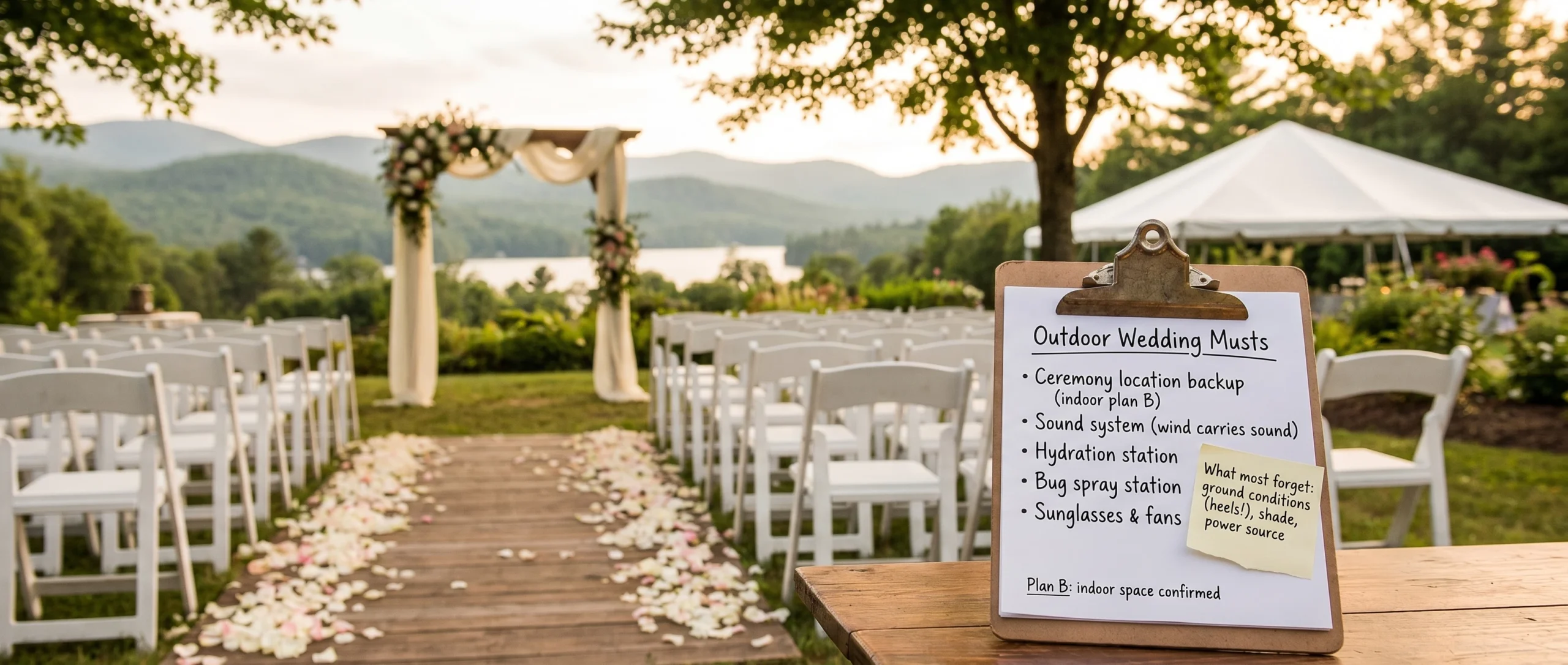
Outdoor weddings offer what no indoor venue can fully replicate: natural light, open air, and the feeling of being somewhere real rather than somewhere rented. They also come with genuine logistical demands that indoor venues handle invisibly. The couples who have extraordinary outdoor weddings plan for both.
This guide covers outdoor wedding ideas for the ceremony and reception, and then the practical logistics that make or break the day.
Cost figures are 2026 US planning estimates, not financial advice.
Outdoor Ceremony Ideas
- Garden ceremony — a formal garden, botanical garden, or manicured park provides built-in beauty with minimal decoration. Look for directional interest (a central path, a fountain, a hedge wall) that frames the ceremony without a constructed arch.
- Woodland or forest ceremony — a grove of mature trees with dappled light creates a natural cathedral and needs almost nothing else. A simple ribbon installation between trees or wildflowers on wooden pedestals is plenty.
- Meadow ceremony with a simple arch — an open meadow with a greenery- or fabric-draped arch against open sky. Particularly photogenic 1–2 hours before sunset.
- Waterfront ceremony — ocean, lake or riverside backdrops create natural focal points and excellent photography. Prepare for wind, both for logistics and styling.
- Rooftop ceremony — an urban option with skyline views, best at dusk. Requires more attention to weather contingency given the exposure.
- Desert or national park setting — landscapes that no decoration can match. Permits are required for most national parks; book 6–12 months ahead.
Outdoor Reception Ideas
- Tent reception on private property — the most flexible format. You control décor, catering and layout entirely, but you rent essentially everything: tent, flooring, lighting, tables, chairs, catering equipment. A string-light or Edison-bulb canopy inside the tent is the single most impactful lighting choice.
- Barn or farm venue — a permanent structure with outdoor access, giving you the aesthetic of an outdoor event with the security of a building if weather turns.
- Garden party reception — for smaller guest counts (under 80), true outdoor receptions with uncovered tables and garden chairs work beautifully. Higher weather exposure; best in reliable seasons.
- Vineyard reception — manicured grounds, golden-hour light through vines, and usually experienced event infrastructure.
- Evening reception with fire elements — fire pits, lanterns, torches and candlelit tables create an extraordinary atmosphere. Check venue fire restrictions carefully.
Décor That Works Outdoors
- Greenery-forward installations — eucalyptus garlands, fern walls and moss arrangements photograph beautifully and hold up better than delicate blooms in heat.
- Wildflower centrepieces in simple vessels — jam jars, bud vases, terracotta pots — look intentional and natural outdoors in a way formal arrangements sometimes don’t.
- Lanterns and candles in wind-protected settings; hurricane lanterns or battery alternatives in exposed ones.
- Fabric draping — linen, organza or gauze tied to trees, archways or tent poles adds softness without floral cost.
- Seating alternatives — wooden benches, hay bales with blankets, vintage hire chairs suit outdoor settings.
- Natural ground covering — a jute or sisal aisle runner holds form better than fabric on grass; flagstone paths or a wooden dance floor prevent stiletto-in-grass problems.
Practical Logistics Most Couples Underestimate
Weather contingency
Every outdoor wedding needs a written contingency plan — not “we hope it doesn’t rain,” but a specific backup space and a decision timeline (typically 48–72 hours out, when the forecast is reliable). Options: a permanent indoor backup, a tent upgrade, or a real rethink of the format. Communicate it clearly to guests and vendors in advance.
Restrooms
For venues without permanent facilities, luxury trailer restrooms are a significant upgrade over standard portable toilets — budget $800–$2,000 for a well-equipped trailer. The guest-experience difference is substantial.
Lighting
Natural light disappears, and what replaces it matters enormously for atmosphere and photography. String lights are the most versatile solution; professional uplighting on tree trunks or structures adds dimension. A lighting-vendor conversation is worth having even on a smaller budget.
Insect management
Citronella candles and torches help. Position bug-spray stations at the entry as a guest amenity, not an afterthought. For a venue with a significant insect issue, professional treatment 48 hours before the event is worth considering.
Heat and shade
For summer afternoon events: parasols or umbrellas at tables, portable misting fans, shaded seating, and consistent cold-drink availability matter more than any décor element.
Noise ordinances
Many venues — private properties especially — have curfew times. Know the curfew, tell your DJ or band, and build your timeline accordingly. Outdoor sound carries; neighbours matter.
Generator access
Venues without permanent power often need a generator for catering, lighting and sound. Confirm power requirements with every vendor and ensure the generator’s capacity is sufficient.
Seasonal Considerations
| Season | Best conditions | Watch for |
|---|---|---|
| Spring | Mild temperatures, blooming backdrops | Rain; late cold snaps |
| Summer | Long evenings, reliable warmth | Heat; insects; fire risk in dry climates |
| Autumn | Golden light, colour backdrop | Wind; early dark; evening temperature drops |
| Winter | Crisp air, low crowd risk | Cold; limited natural light |
Frequently Asked Questions
Do we need wedding insurance for an outdoor wedding?
Strongly recommended. Weather, vendor cancellations and venue issues create specific risks that indoor venues have more built-in protection against. Wedding insurance is relatively affordable and covers exactly these scenarios.
Is an outdoor wedding cheaper?
Not necessarily. Private-property weddings require renting everything — tent, flooring, tables, chairs, catering equipment, restrooms, power. A fully equipped outdoor wedding on private property often costs as much as or more than a venue that includes these elements.
How do we handle wind for an outdoor ceremony?
Secure paper items, weight down linens, choose robust floral arrangements over delicate ones, brief your officiant on speaking volume, and have a backup amplification plan.
What’s the biggest outdoor wedding mistake?
Skipping the weather contingency plan. Even a clear forecast can change within 24 hours. A couple with a clear, communicated plan arrives on the day with far lower anxiety regardless of the weather.
Can we do an outdoor wedding with 150+ guests?
Yes, with the right infrastructure — a clear-span tent with proper flooring, adequate restrooms, sufficient power, and professional catering with appropriate equipment.
The Outdoor Wedding You’ll Actually Love
The outdoor weddings that feel effortless took significant planning to get there. Identify your contingency plan early, solve the practical logistics before the decorative ones, and then let the setting do what no indoor venue can. For the aesthetic side, see our rustic wedding ideas guide.