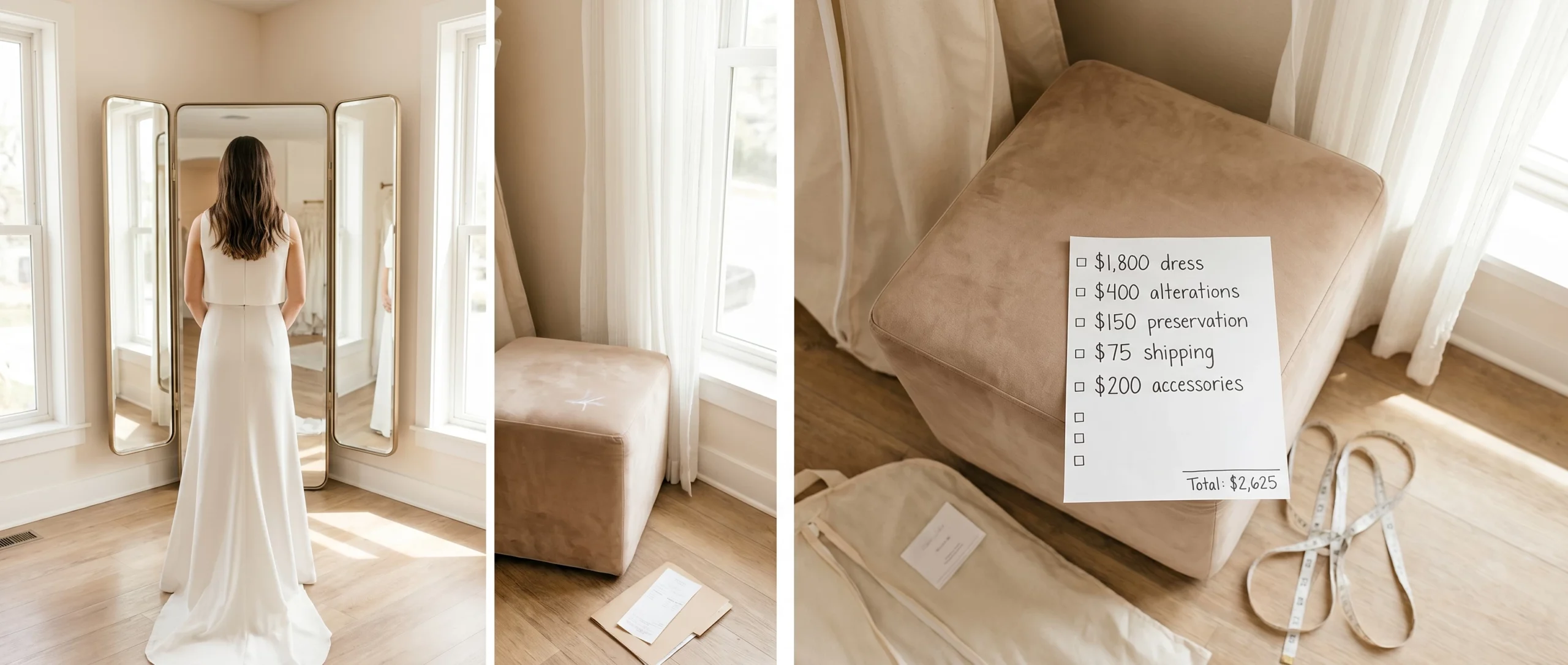
The wedding dress is one of the most talked-about purchases in wedding planning — and one of the most consistently misbudgeted.
The average wedding dress cost cited most often (around $1,800 in the US) represents the gown purchase only. It doesn’t include alterations, the veil, accessories, shoes, or preservation afterward. For most brides, the real cost of the complete look is 40–70% higher than the gown alone — which is why the dress budget so often overruns even when the gown itself came in on target. This guide breaks down the full number: what you’re actually paying for, where prices differ most, and how to approach the decision so it fits your real financial situation.
Figures are 2026 US averages for planning guidance, not financial advice. Regional and designer variation is large — use these as a frame, then price your own shortlist.
The Gown: What It Costs in 2026
| Tier | Gown price range |
|---|---|
| Budget | Under $500 |
| Mid-range | $500–$2,000 |
| Designer | $2,000–$5,000 |
| Luxury / couture | $5,000–$30,000+ |
The US average sits around $1,800, but that number masks wide regional variation. In major metro areas — New York, Los Angeles, Chicago — the average is significantly higher, and $2,500–$4,000 is common for non-designer gowns from established bridal salons. In smaller markets, the same quality gown can cost $1,000–$1,500.
The designer matters enormously. A gown from a mass-market bridal line costs a fraction of what the same silhouette and fabric cost from a heritage couture house. For most brides, the visual difference in photographs is smaller than the price gap suggests — the difference you feel at the fitting is often construction and fabric weight, not something a camera captures.
What’s Not Included in the Gown Price
Alterations — the most underestimated cost
Alterations are almost always a separate charge from the gown purchase, billed by the salon or an independent seamstress after the dress arrives. Complexity varies enormously by dress style:
- A simple sheath or column gown with no internal structure: $150–$400
- A ballgown with a structured bodice, boning and a full skirt: $600–$1,200+
- A heavily beaded or lace gown where every stitch has to align across a seam: potentially more
Most brides need at least a hem, a bustle and some bodice fitting, across two or three appointments. Plan a minimum of $300 regardless of style, and budget $600–$800 if your gown has any significant structure or surface detail. If you’re bringing your bridal party for their alterations too, that’s a separate line again.
The veil
Veils range from $50 (simple tulle from an online retailer) to $800+ (designer, with hand-sewn edging or beading). Bridal-salon veils are typically at the higher end because they’re often designer pieces meant to match a specific gown. Most brides spend $100–$400.
Accessories
Jewellery, hair accessories, and any sash, belt or cover-up you plan to wear are typically separate from both the gown and veil. Costs range from minimal (borrowed family jewellery) to several hundred dollars for custom pieces. A second-look topper or overskirt for the reception is its own line if you want one.
Shoes and undergarments
Bridal shoes run $80–$400+. A structured gown may require a specific strapless bra, shapewear, or custom cups sewn in (sometimes included in alterations, sometimes not). Budget $50–$150 for undergarments.
Dry cleaning and preservation
Post-wedding cleaning and preservation runs $300–$600 depending on the gown’s complexity and whether you want it boxed for long-term storage. This is the line that surprises couples most, because it arrives weeks after the wedding when the budget is closed.
The Complete Bridal Attire Budget
| Item | Typical range (mid-range) |
|---|---|
| Gown | $800–$2,500 |
| Alterations | $300–$800 |
| Veil | $100–$400 |
| Jewellery & accessories | $100–$500 |
| Shoes | $80–$300 |
| Undergarments | $50–$150 |
| Subtotal (excl. preservation) | $1,430–$4,650 |
| Preservation (after the wedding) | $300–$600 |
For a mid-range bride, $2,000–$3,000 all-in for the complete look (excluding preservation) is a realistic working figure.
How to Allocate Your Dress Budget
Most financial guidance suggests spending no more than 5–10% of your total wedding budget on the gown. In practice, what feels right varies significantly between couples. A more useful framework: spend what genuinely feels worth it for something you’ll wear once but photograph forever — then stop. The dress is visible in nearly every wedding photo and it matters, but so does your photographer, your venue and your florist. A dress that pushes your budget significantly over your limit means something else gets cut; decide in advance which category you’d trade.
Where to Buy: Price vs. Experience Trade-offs
Bridal salons
The traditional path: you work with a consultant, try on samples, order your size, and receive the gown four to six months later, with alterations often available in-house. The experience is personal and the selection is curated. The cost: salons mark up designer wholesale significantly, so a well-known designer gown costs considerably more at a salon than the same gown on the secondary market.
Online retailers
Direct-from-designer sites (BHLDN, Azazie, Lulus) and international retailers offer gowns at significantly lower prices. The trade-off is fit risk — you’re buying from standard sizing tables rather than trying on samples, and return policies vary. Online works best for brides with a clear sense of their measurements, a simpler gown style, and a realistic alteration plan.
Sample sales
Bridal salons periodically sell floor samples — the gowns brides try on in store — at 40–70% off retail. These are the exact gowns you’d try on at a normal appointment, with wear from multiple fittings, sold as-is. Alteration needs may be higher. Watch for Kleinfeld’s sample sale, designer trunk-show clearances, and local salon end-of-season events.
Preowned and consignment
Resale platforms like StillWhite and Preowned Wedding Dresses offer worn-once gowns at 50–80% off retail. This works particularly well for popular designer styles where you already know exactly what you want and just need it in your size.
Timing: When to Buy
The standard advice is to order 9–12 months before the wedding: four to six months for manufacturing and delivery, two to three months for alterations across multiple appointments, plus a buffer for anything unexpected. Rushing to 4–6 months out is possible but involves rush fees and a compressed alteration timeline. Under four months usually means buying off-the-rack or taking whatever’s available in your size as a sample. If you’re a few months out with no dress, off-the-rack and preowned are your best paths — plenty of brides have found beautiful gowns this way.
Frequently Asked Questions
Is it worth buying a more expensive dress?
Quality and cost don’t correlate perfectly. Some exceptional mid-range gowns outperform higher-priced designer options in craftsmanship and fit. If you love it on and it fits your budget, the label matters less than how you feel wearing it.
What if my budget is under $500?
Sample sales, preowned platforms and online retailers are your best options. Several well-regarded online bridal brands — Azazie, BHLDN, Reformation — offer beautiful gowns in this range, particularly for minimalist and contemporary styles.
Should I tell the salon my real budget?
Yes — a good consultant will show you gowns within your range. Be prepared for a consultant to pull one or two options above budget “just to compare”; it’s completely fine to decline to try them on.
When is the worst time to buy a wedding dress?
Within three months of the wedding without a solid off-the-rack plan. The rush fees and compressed timelines create stress and can limit your options significantly.
What happens if the dress arrives and doesn’t fit?
That’s what alterations are for. Most issues — too large, hem length, incorrect cup size — are fixable. Very large size discrepancies in off-the-rack purchases can be more complex. For gowns ordered through salons, the measurement appointment during ordering reduces this risk.
Can I negotiate on dress price?
At bridal salons, the gown price is rarely negotiable. But some salons include complimentary alterations, a free veil, or a discount on floor stock — always ask what’s included and what’s flexible before you commit.
Know Your Full Number Going In
The wedding dress is the one item visible in almost every photograph and worn closest to you all day. Getting the budget right means budgeting the real cost — alterations, veil, accessories, preservation — not just the sticker price. Use the free Wedding Dress Budget Allocator to split your allocation across gown, alterations and accessories, and the Wedding Dress Silhouette Finder to walk into your first appointment with a clear direction. Then fit the total into your wider wedding budget breakdown.