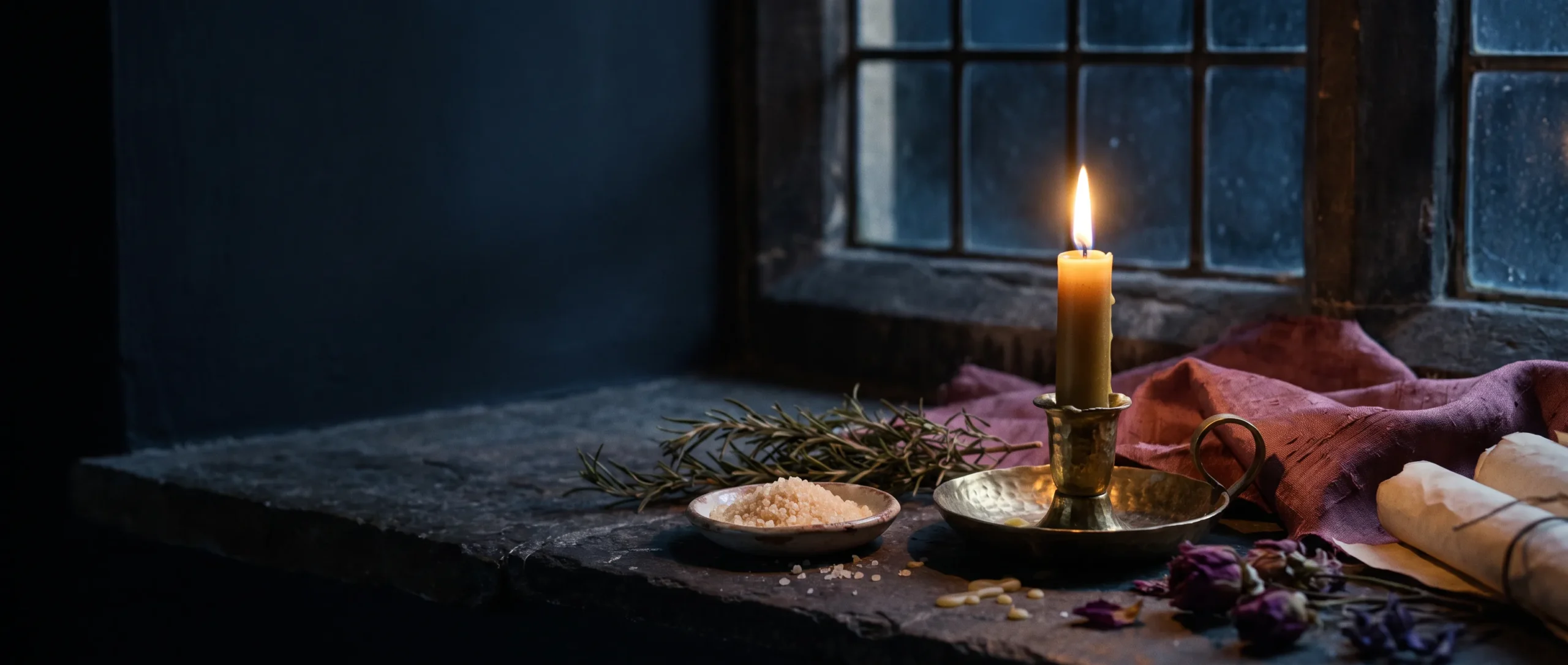
A house blessing is a small ceremony that marks a new home as yours and welcomes warmth, safety, and good energy into it. It exists in nearly every culture — Christian house blessings, Jewish chanukat habayit, the Hindu griha pravesh, Celtic hearth blessings, cleansing rituals in many folk traditions. For newlyweds or couples moving in together, it’s a way to start the home with intention rather than just boxes.
Here’s a simple version and how to adapt it.
A Simple, Non-Religious House Blessing
You need: a candle, something to make a little sound (a bell, a bowl, even clapping), and optionally water, salt, or a herb bundle. Do it once the space is mostly empty, before you fully move in if possible.
- Enter with intention. Pause at the front door. Say aloud (together, if there are two of you) what you want this home to be: “May this be a house of warmth, honesty, rest, and enough.”
- Go room to room. In each room:
- Make a sound in each corner (this “wakes up” the space and, in folk tradition, clears stale energy).
- Name what that room is for: “This is where we cook and feed people.” “This is where we sleep and are safe.” “This is where we work.”
- Optionally, place a drop of water or a pinch of salt on the windowsill.
- Bless the threshold. Back at the front door, mark it — a small symbol, a coin under the mat, a sprig of rosemary or heather above the frame (both are protective in the language of flowers).
- Light the hearth. Light your candle (or the stove, or the fireplace) as the “first fire” of the home. Let it burn a while. This is the oldest part of the ritual — the lit hearth is the heart of the house.
- Share food. The traditional close: eat something in the new home, even just bread and salt, or a proper meal with the people who matter.
Why room-by-room, and why sound
Naming each room’s purpose out loud does something practical as well as ceremonial: it’s the two of you agreeing, in the space, on what the home is for before daily life crowds the question out. “This is where we rest” is a small shared decision that a phone-in-bed habit erodes later. The sound in the corners is folk practice for clearing stagnant energy, but it also just makes you move slowly and deliberately through a space you’re about to live in fast.
Blessings by Tradition
- Irish: “Bless this house, O Lord we pray. Make it safe by night and day.” / “May the roof above never fall in, and those below never fall out.”
- Jewish: the chanukat habayit often includes affixing a mezuzah to the doorpost and a blessing over the home.
- Scottish/Celtic: “Lang may yer lum reek” — long may your chimney smoke, a wish for a warm, well-provisioned home for years.
- Hindu: griha pravesh is a full ceremony with a priest, a sacred fire (havan), and an auspicious date and time.
- Secular: any sincere statement of intention works — the words matter less than saying them out loud, together, in the space.
A Version for Newlyweds
If you’re moving in together as a married couple, add one step: at the hearth-lighting, each person says one thing they’re bringing to the home (a habit, a value, a hope) and one thing they’re leaving at the old address (a pattern, a grudge, a way of living alone). It takes two minutes and it turns the blessing into a small marriage ritual as well as a house one. Keep the “first fire” candle and relight it on your anniversary.
Light a virtual candle and get a hearth reading for your home with the free The Hearthflame Reading — the flicker of the flame generates a short reading on the energy you’re bringing to your space.
Frequently Asked Questions
How do you bless a new home?
Enter with a spoken intention, go room to room making a sound in each corner and naming what the room is for, mark the threshold (a symbol, a coin, a protective herb), light a “first fire” (candle or hearth), and share food. Adapt the words to your beliefs.
What is a good house blessing prayer?
The Irish “Bless this house, O Lord we pray, make it safe by night and day” is the most widely used. A secular version: “May this be a home of warmth, honesty, rest, and enough.”
When should you bless your house?
Ideally when it’s mostly empty — before or during the move-in — so the ceremony sets the tone before daily life fills the space. Some traditions specify an auspicious date and time.
Do you need a priest or officiant for a house blessing?
No, unless your tradition calls for one (a Hindu griha pravesh or a formal Catholic blessing typically involves clergy). Most house blessings are done by the people who live there.
What do you put above the door for protection?
Common choices: a horseshoe (open end up), a sprig of rosemary or heather, a small cross or hamsa, or a coin under the doormat — all folk symbols of a protected threshold.
Can you bless a rented apartment or a home you already live in?
Yes. For a place you already occupy, do a version focused on clearing rather than welcoming — open the windows, move through with sound, and re-state what you want the home to be. It’s a common practice after a breakup, an illness, or a hard year in a space.
What if my partner isn’t spiritual and I am?
Frame it as a shared intention-setting rather than a ritual — most reluctant partners are fine with “let’s walk through and say what we want each room to be for” even if “blessing” isn’t their word. Keep it short, let them opt out of any part that feels off, and the act of doing it together is the point.
Start the Home on Purpose
A house blessing is a fifteen-minute ceremony that turns a building into your home — spoken intention, room by room, a first fire, and a shared meal. For a couple starting out, it’s a good first thing to do together in a new space.
Get a hearth reading for your home with the free The Hearthflame Reading.