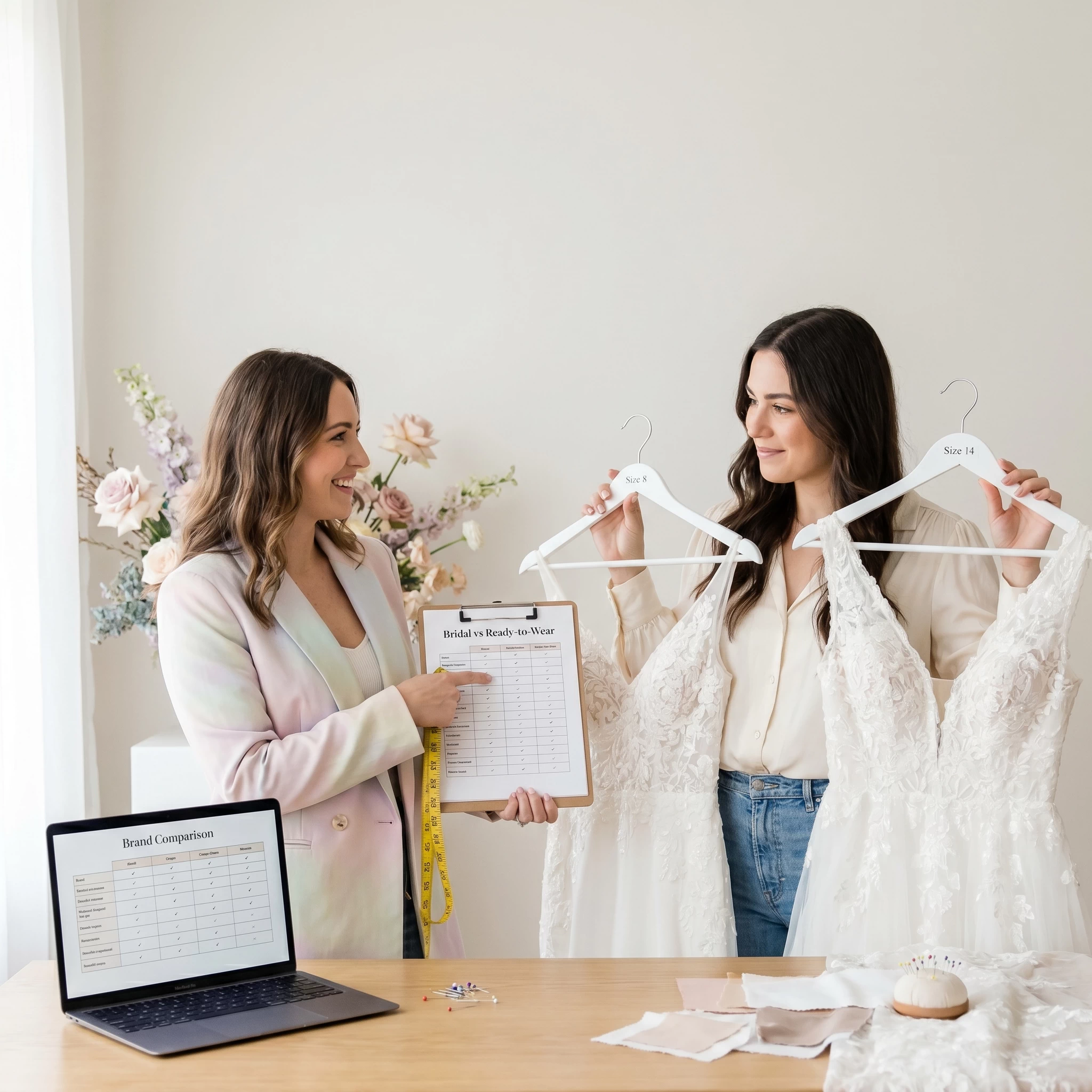
You’ve just tried on your dream dress. It’s beautiful. The bridal consultant tells you to order a size 14.
You’re a size 6 in every other store you’ve ever shopped in.
This moment — completely normal, completely disorienting — happens to nearly every bride. It’s not a comment on your body. It’s a quirk of how bridal sizing works, and understanding it before you walk into an appointment saves you significant anxiety.
This guide explains why bridal sizes run the way they do, how to take your measurements correctly, what size to order when measurements fall between sizes, and a brand-by-brand size chart for 15 major designers.
Why Bridal Sizes Run Larger Than Street Sizes
Bridal sizing has not kept pace with the evolution of standard clothing sizes. In the 1950s, street clothing and bridal clothing used similar sizing charts. Since then, mainstream fashion adopted “vanity sizing” — consistently cutting clothes larger so customers feel they’re wearing a smaller size.
Bridal designers largely did not follow this shift. Most still use sizing charts closer to the original standards, which means:
- A size 8 in a mainstream brand often corresponds to a size 12 in bridal
- The number on the bridal label is almost always larger than any number you’ve worn before
- This is standard, expected, and universal across the industry
The practical rule: add 2–4 sizes to your typical street size as a starting reference point before measuring. Your actual order size comes from your measurements, not from any size number.
How to Measure Yourself Correctly
Bridal fit is determined by three measurements. Take them in your bra and underwear, standing naturally. Keep the tape snug but not compressing.
Bust
Measure around the fullest part of your chest, keeping the tape parallel to the floor. Arms at your sides.
Waist
Measure around your natural waist — the narrowest part of your torso, typically 1–2 inches above your navel. Breathe normally; don’t hold your breath in.
Hips
Measure around the fullest part of your hips and seat, typically 7–9 inches below your natural waist.
Height
Your height matters for floor-length gown length, particularly if you’re under 5’4″ or over 5’8″. Many designers offer petite and tall sizing, or alteration allowances for length.
Always measure twice. If possible, have someone else take your measurements — accurate bust measurements are difficult to take on yourself.
→ Once you have your three measurements, use the Wedding Dress Size Calculator to see your recommended size across 15 major bridal brands at once.
Brand-by-Brand Bridal Size Chart: 15 Major Designers
The following table shows approximate bust measurements for each brand’s standard sizes. These are general guidelines — always verify with the specific brand’s current size chart before ordering, as sizing can update between collections.
| Brand | Size 10 Bust | Size 12 Bust | Size 14 Bust | Size 16 Bust |
|---|---|---|---|---|
| David’s Bridal | 35.5″ | 37″ | 38.5″ | 40″ |
| Allure Bridals | 35.5″ | 37″ | 38.5″ | 40″ |
| Maggie Sottero | 35″ | 36.5″ | 38″ | 39.5″ |
| Stella York | 36″ | 37.5″ | 39″ | 40.5″ |
| Rebecca Ingram | 35″ | 36.5″ | 38″ | 39.5″ |
| Justin Alexander | 35″ | 36.5″ | 38″ | 39.5″ |
| Pronovias | 35″ | 36.5″ | 38″ | 39.5″ |
| Monique Lhuillier | 34.5″ | 36″ | 37.5″ | 39″ |
| Vera Wang | 34.5″ | 36″ | 37.5″ | 39″ |
| Hayley Paige | 35″ | 36.5″ | 38″ | 39.5″ |
| Wtoo by Watters | 35.5″ | 37″ | 38.5″ | 40″ |
| Essense of Australia | 35.5″ | 37″ | 38.5″ | 40″ |
| Enzoani | 35″ | 36.5″ | 38″ | 39.5″ |
| Lazaro | 34.5″ | 36″ | 37.5″ | 39″ |
| Anne Brent | 35″ | 36.5″ | 38″ | 39.5″ |
Values are approximate and subject to change by season. Confirm with your bridal boutique before ordering.
Key observation: even among these 15 brands, there’s a 1.5″ variance in the same nominal size. This is why your measurement — not the size number — is the only number that matters when ordering.
The One Rule That Saves Every Fitting: Order Up
When your bust, waist, and hips fall into different sizes, always order the size that fits your largest measurement.
Dresses are difficult to let out but relatively easy to take in. If you order for your bust and the hips are too snug, a seamstress may not have enough fabric to help. If you order for your hips and the waist is slightly loose, that’s an alteration of a few seams.
Example: your bust measures a size 10, your waist a size 12, your hips a size 14. Order size 14 — have the waist and bust taken in during alterations.
This is the universal recommendation from bridal consultants and seamstresses across the industry, without exception.
Understanding Petite and Plus Sizing in Bridal
Petite Sizing
If you’re 5’3″ or under, consider designers who offer a dedicated petite range. The difference isn’t only hemline — it’s proportional adjustments to bodice length, armhole placement, and neckline depth. Off-the-rack petite bridal sizes are less common than in mainstream fashion; many shorter brides order standard length and hem during alterations.
Plus Sizing
Most bridal designers offer sizes through at least a size 28–30, though available styles in larger sizes vary significantly by brand. David’s Bridal, Stella York, and Essense of Australia have notably strong plus-size ranges with consistent style availability. If you’re shopping above a size 20, call ahead to confirm which styles are available to try on at your specific boutique.
Order and Alteration Timeline
| Step | Timeline Before Wedding |
|---|---|
| Order the dress | 6–9 months |
| First fitting | 2–3 months |
| Second fitting | 6–8 weeks |
| Final fitting | 1–2 weeks |
Bridal gowns are typically made to order and take 4–6 months to arrive. Order earlier than you think you need to — alteration windows are fixed, and late dresses cause real stress.
Plan 2–4 fittings total. The first fitting establishes what alterations are needed. The final fitting confirms everything is perfect, and you take the dress home.
What Do Alterations Cost?
Alterations are almost always necessary and should be budgeted for separately from the gown.
| Alteration | Typical Cost |
|---|---|
| Hem (simple skirt) | 150–350 |
| Hem (layered or beaded) | 350–700+ |
| Bustle addition | 75–200 |
| Waist take-in | 75–150 |
| Strap adjustment | 50–150 |
| Full set of alterations | 300–800 |
Build 400–600 into your total dress budget for alterations before you finalize what you can spend on the gown itself. For a complete breakdown including accessories, see our wedding dress budget guide.
What to Wear to a Bridal Appointment
- The undergarments you plan to wear on your wedding day (or something similar in style)
- A strapless bra — most gown styles require one
- Heels at approximately the height you’ll wear on the day (silhouette and length look different at different heel heights)
- Hair pulled up so you can see the neckline clearly
- Minimal jewelry — you’ll be trying a lot on
FAQ: Wedding Dress Sizing
Why do bridal sizes run so much larger than regular sizes? Bridal sizing charts were established decades ago and haven’t updated the way mainstream fashion has. Most bridal brands still use older standards that run approximately 2–4 sizes smaller than contemporary street clothing. It’s industry-wide and has nothing to do with your body.
What if I’m between sizes? Order up — always order for your largest measurement and have the dress taken in by a seamstress. Taking a dress in is a standard alteration; letting it out significantly is often not possible without additional fabric panels.
Can I measure myself at home? Yes, but have someone else help if possible. Getting an accurate bust measurement on yourself is genuinely difficult. Use a soft fabric measuring tape, not a rigid tape measure.
Do I need to try on a dress in my actual size? No — bridal boutiques typically only carry samples in a limited size range (often size 10 or 12). Your consultant will clip and pin the sample to approximate the fit. The sample size has no bearing on what you order — your order is based entirely on measurements.
What if my measurements change between ordering and fittings? Most bridal boutiques account for 5–10 pounds of fluctuation in either direction. If you anticipate larger changes, discuss this with your consultant at the ordering appointment. Alterations can accommodate most changes at the fitting stage.
How do I use the WSC dress size calculator? Use the Wedding Dress Size Calculator — enter your bust, waist, and hip measurements in inches and it returns your recommended size across 15 major brands simultaneously. It also identifies which silhouette styles are available in your size range at each brand.
The Number on the Label Doesn’t Define Anything
The size on a bridal label is purely functional — it tells a seamstress where to start cutting. It has nothing to do with what size you “are” or how your body looks in the dress.
Every bride leaves the boutique in a dress that needed alterations. Every bride has a number on her label that surprised her. And every bride, standing at her final fitting in a gown that fits perfectly, stops caring about that number entirely.
Use the Wedding Dress Size Calculator to find your starting size across every major brand.
For the full wedding planning picture — dress shopping timing, budget, vendor selection, and everything else — browse the 20 free planning tools at weddingserenity.com/tools, all free with no account required.
For guided weekly support through every stage of planning, the Wedding Serenity Club is available as a gift starting at $50, delivered instantly.