The maid of honor speech is one of the most watched moments at a wedding reception. Everyone is paying attention — including people who tuned out for the other speeches. It’s an opportunity and a pressure in equal measure.
The good news: a great maid of honor speech doesn’t require natural public-speaking talent. It requires a clear structure, the right stories, and the discipline to leave out the wrong ones. This guide walks through how to write and deliver one the couple will talk about for years.
How Long Should It Be?
The answer almost every speaker ignores: 3–5 minutes, maximum. At a comfortable pace (around 120 words per minute), that’s 360–600 words. Read it aloud three times and time it — most people speak faster than they expect when nervous, so a speech that feels right in rehearsal can fly by at the podium.
A fully earned 5-minute speech is rare and beautiful. A 10-minute speech that should have been 4 is a different experience for the room. Write to 4 minutes, then cut.
The Structure That Works
Every memorable maid of honor speech has the same shape:
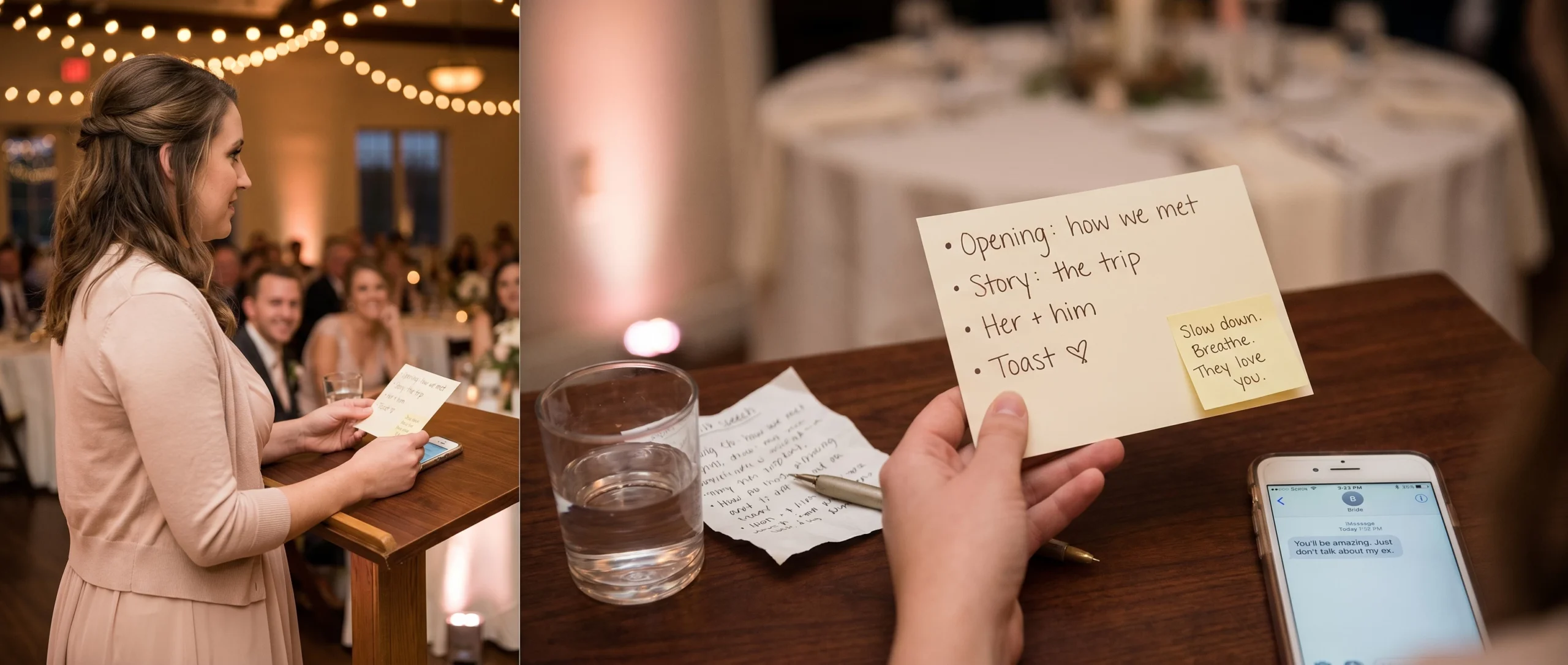
- Open with something that makes people pay attention (30–45 seconds). Not “Hi, I’m [name], and I’ve known [bride] for X years” — that opening tells the room the next few minutes will be generic. Start with a story, an observation, or a single specific detail that immediately conveys who you’re talking about.
- Tell one story about the bride that reveals her character (60–90 seconds). One story, not three. The best speeches centre on a single specific moment that shows who she is — her humour, her loyalty, her stubbornness in the best possible way. The more specific the detail, the more universal the recognition.
- Acknowledge what the partner brings (30–45 seconds). A brief, sincere observation about the partner and what they bring to her life. What have you noticed since they’ve been together? What’s different about her?
- Toast the couple (30–45 seconds). A direct, sincere address to both of them — what you wish for them, what you’re certain of. Not the place for more jokes. Finish clean and warm.
- Raise the glass. “Please join me in raising a glass to [names].” The room knows to follow.
The Right Stories
- They reveal rather than describe. Don’t say “she’s the most loyal person I know.” Tell the story where she drove four hours in the middle of the night because you called. The room draws the conclusion.
- They’re specific and detailed. “The time she wore her snowboard boots to the library for two weeks because she lost her regular shoes” is a story. “She’s always been funny” is not.
- They have a clear emotional core. Funny, tender, or both at once. The road trip that went catastrophically wrong but ended in a moment of real connection is the template for almost every memorable wedding speech.
- They involve people in the room. “Those of you who were there for the New Year’s party where…” lands better than a story only you and the bride know.
What to Avoid
- Embarrassing content she hasn’t approved. The “I won’t mention Vegas” acknowledgment that makes the bride visibly uncomfortable is not charming. If unsure whether a story is welcome, ask her.
- Ex-partner references. Even as a quick joke. Skip it entirely.
- How nervous you are. Opening with “I’m not good at public speaking” shifts the room’s energy from anticipation to anxiety on your behalf.
- Too many inside jokes. One, explained briefly, creates warmth. Three unexplained ones alienate everyone.
- Speeches that are really about you. If most of your speech is about how close you are and how much she means to you, rebalance toward her.
- Reading from a phone. It creates a visual barrier and signals low preparation. Use large-font notecards or a single page.
Delivery Tips
- Rehearse aloud, more than you think you need to. Words sound different spoken. Sentences that read beautifully sometimes stumble.
- Slow down. Speaking slowly gives the room time to process and laugh, and makes pauses feel intentional. Practise at 80% of your natural pace.
- Make eye contact — with the bride at emotional moments, the room during funny ones, both of the couple at the toast.
- Plan for the unexpected. If you cry, stop, breathe, continue — the room is with you. If you get a laugh, wait for it to settle. The pause after a laugh is gold.
- Know your beginning and end cold. The opening line and the toast line are where your voice is most likely to shake. Memorise them.
A Worked Example
“The first time I understood exactly who [bride] is, we were nineteen and she was already calling the hospital to make sure her roommate had actually been admitted. Not texting. Calling. On a landline. She’d been awake for 36 hours.
That’s her — completely, stubbornly present for the people she loves. She has never once let the inconvenient become a reason not to show up.
[Partner], I’ve been watching the two of you for three years, and the thing that gets me every time is how she laughs with you. Not at your jokes — with you, as if she’s always in on whatever you’re thinking. I’ve known her for fifteen years and I’ve never seen her quite that easy with anyone.
[Bride and partner], I hope your whole life together looks like that. Easy, present, and full of that particular laugh. Please raise a glass to [names].”
That’s roughly 140 words — about a minute spoken. Expand the story in paragraph two, add one line about the partner, and you’re at a clean 3–4 minutes.
Frequently Asked Questions
What if I’m not naturally funny?
Don’t try to be. A warm, sincere speech that makes people feel something beats a speech that reaches for laughs and misses. Pick warmth over comedy if you have to choose.
Is it okay to cry?
Completely. A brief moment of genuine emotion followed by composure reads as authentic. Have a breath strategy ready — a long exhale usually helps.
Should I coordinate with the best man?
Ideally yes — a quick check that you’re not using the same story or joke. A duplicated anecdote is awkward for everyone.
How early should I write it?
At least four weeks before the wedding. Writing it the night before leads to speeches that are too long, under-rehearsed, and often too emotional to deliver cleanly.
Can I ask the bride for input?
Yes — particularly on whether specific stories are welcome and whether she’d like to hear it in advance. Some brides want to be surprised; others want to check the tone. Ask which she’d prefer.
The Speech She Deserves
The best maid of honor speeches are remembered not because they were perfectly written but because they were genuinely felt. Write about the person she actually is, tell one story that captures it, and mean what you say when you raise the glass. That’s the whole formula. See bridesmaid duties and maid of honor duties for the rest of the role.