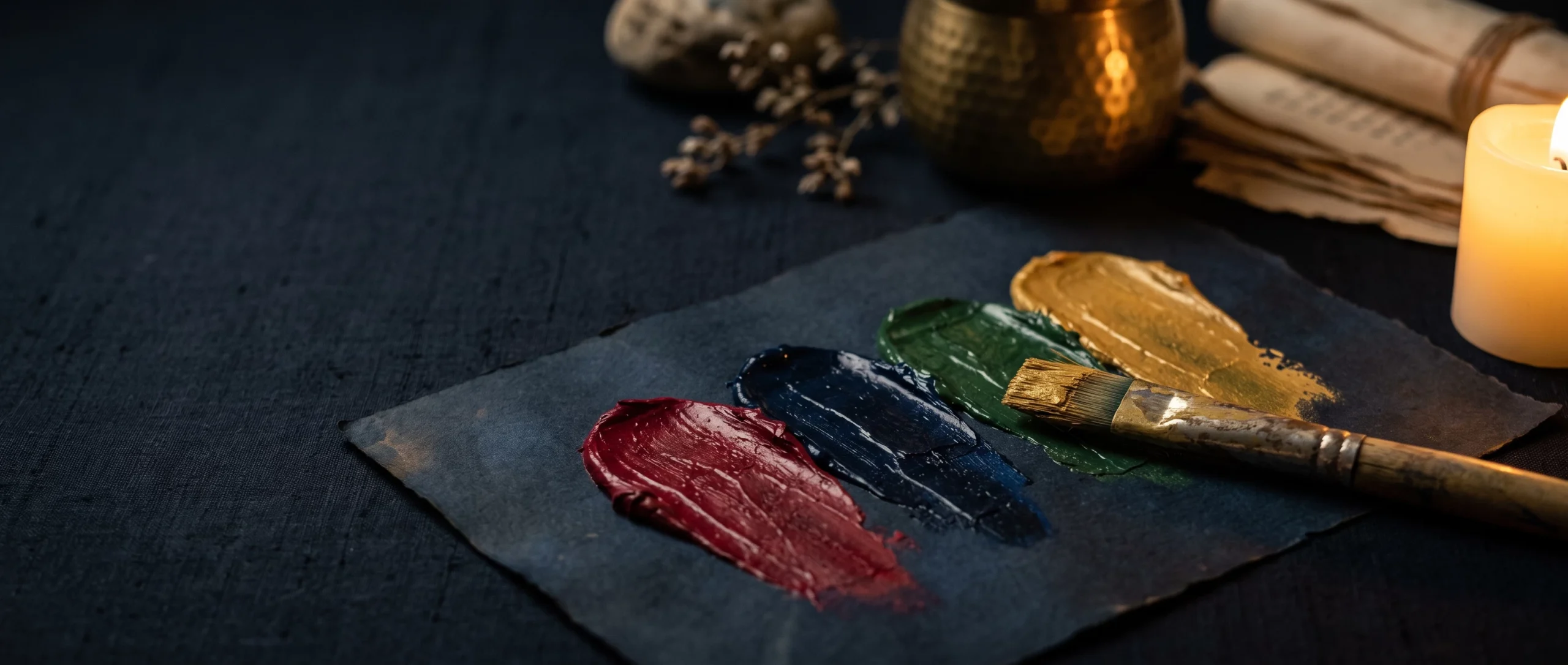
A color personality quiz sorts you into one of four color types — usually red, blue, green, and yellow — based on how you make decisions, handle stress, and relate to people. The system comes from personality frameworks like True Colors and the Color Code, which simplify traits into colors so they’re easy to remember and talk about.
Here’s what each color means, how the four-color model works, and — since color is so personal — how your color type can shape choices like your wedding palette.
The Four Color Personality Types
| Color | Core drive | Strengths | Under stress |
|---|---|---|---|
| Red | Power, results, action | Decisive, direct, gets things done, leads | Impatient, blunt, controlling |
| Blue | Connection, meaning, harmony | Empathetic, loyal, creative, deeply caring | Over-sensitive, self-critical, conflict-avoidant |
| Green | Logic, competence, understanding | Analytical, calm, independent, precise | Withdrawn, overly critical, slow to commit |
| Yellow | Fun, freedom, spontaneity | Optimistic, charming, adaptable, energizing | Scattered, avoids depth, over-promises |
Most people are a primary color with a strong secondary — a “blue with yellow” is a warm, people-centered person who also needs play and lightness. The primary tells you what you optimize for; the secondary tells you how you recharge.
Where the Model Comes From
The four-color approach descends from Hippocrates’ four temperaments, updated repeatedly — most famously by Don Lowry’s True Colors (1978) for education and team-building, and by Taylor Hartman’s Color Code. The “8 colors” versions some quizzes use (adding shades like turquoise, coral, indigo) are more granular takes on the same idea.
It’s a simplification, not a clinical instrument — but it’s a genuinely useful shorthand for “how do you and this other person differ,” which is why couples and wedding parties use it. Unlike a long assessment, “I’m a blue, you’re a red” is a phrase you’ll actually remember and reach for mid-argument.
What Your Color Says About How You Love
- Red in love — direct about wanting you, decisive about commitment, shows love by solving problems and providing. Growth edge: softness and listening.
- Blue in love — the romantic. Needs deep emotional connection, quality time, words. Growth edge: not losing themselves in the relationship.
- Green in love — steady and loyal, shows love through reliability and thoughtfulness, slow to open up. Growth edge: expressing feelings out loud.
- Yellow in love — playful, spontaneous, keeps things light and fun. Growth edge: staying present through the hard conversations.
Common couple combinations
- Red + Blue — results-driven meets meaning-driven; productive and common, but the pair most likely to need to translate. The Red needs to slow down for the Blue’s feelings; the Blue needs to not read the Red’s bluntness as coldness.
- Green + Yellow — the planner and the improviser. The Green keeps them solvent; the Yellow keeps it fun. Friction shows up around spontaneity and structure.
- Blue + Yellow — two warm, people-focused types; lots of connection, but someone has to be the adult about logistics.
- Red + Green — both task-focused, low-drama; the risk is a relationship that runs efficiently but forgets to be affectionate.
Your Color as a Wedding Palette
This is where the color personality quiz gets genuinely useful for a bride. Your instinctive color type usually maps onto the palette you’ll actually be happy looking at for a year of planning:
- Red → jewel tones, high contrast, a bold single accent (burgundy, emerald, black).
- Blue → soft, harmonious, tonal (dusty blue, sage, blush — nothing clashing).
- Green → natural and understated (ivory, olive, terracotta, wood).
- Yellow → bright and joyful (coral, marigold, sky blue, mixed brights).
If you and your partner are different color types, the palette conversation is worth having early — a Red who wants black-and-burgundy drama and a Blue who wants a soft tonal blush will each quietly hate the other’s Pinterest board unless you name it. The usual compromise: let one type lead the palette and the other lead a different element (the music, the food, the venue vibe).
Turn your color into a full palette with hex codes using the free Palette of the Heart — it takes your Venus sign and life-path number and returns a wedding color palette you can hand straight to a florist or stationer.
Frequently Asked Questions
How do I find my color personality?
Take a color personality quiz (True Colors and Color Code are the established ones) that asks about how you decide, handle stress, and relate to people. It sorts you into a primary color with a secondary.
What are the four color personality types?
Red (power, results, action), Blue (connection, meaning, harmony), Green (logic, competence, understanding), and Yellow (fun, freedom, spontaneity). Most people are a blend of a primary and a strong secondary.
What are the 8 colors personality test types?
The eight-color versions split the four core colors into lighter and deeper shades (for example, a “cool blue” analytical type versus an “earth green” nurturing type) for a more granular result. The underlying model is the same four-temperament idea.
What is my color based on my personality?
Broadly: decisive and driven → red; empathetic and meaning-focused → blue; analytical and calm → green; spontaneous and optimistic → yellow. A quiz refines this by weighing which traits are strongest.
What are the “true colors” of personality?
“True Colors” is a specific 1978 personality program by Don Lowry that assigns Orange, Blue, Gold, and Green (a slightly different palette than red/blue/green/yellow) to four temperament types. It’s widely used in schools and workplaces.
Can my color personality change over time?
The framework treats your primary as fairly stable, but your secondary can shift with life circumstances, and stress can make you present as a different color than your natural one (a burned-out Yellow can look Green; a threatened Blue can look Red). Retaking a quiz every few years often shows the primary holding and the secondary moving.
A Shorthand You’ll Actually Use
A color personality quiz won’t tell you anything a long personality assessment couldn’t — but “I’m a blue, you’re a red” is a phrase you and your partner will actually remember and use when you’re negotiating a guest list. And your color type is a genuinely reliable guide to the palette you’ll be happy with.
Build yours with the free Palette of the Heart.