Your wedding photographer will spend more time with you on your wedding day than almost anyone else, and their style determines what your wedding looks like forever.
Knowing the difference between documentary, editorial, fine art, and lifestyle photography before you start interviewing saves time and helps you find someone whose vision aligns with yours. This guide covers the six main wedding photography styles, what each looks like, who it suits, and the questions that reveal what a photographer actually delivers.
The Six Main Wedding Photography Styles
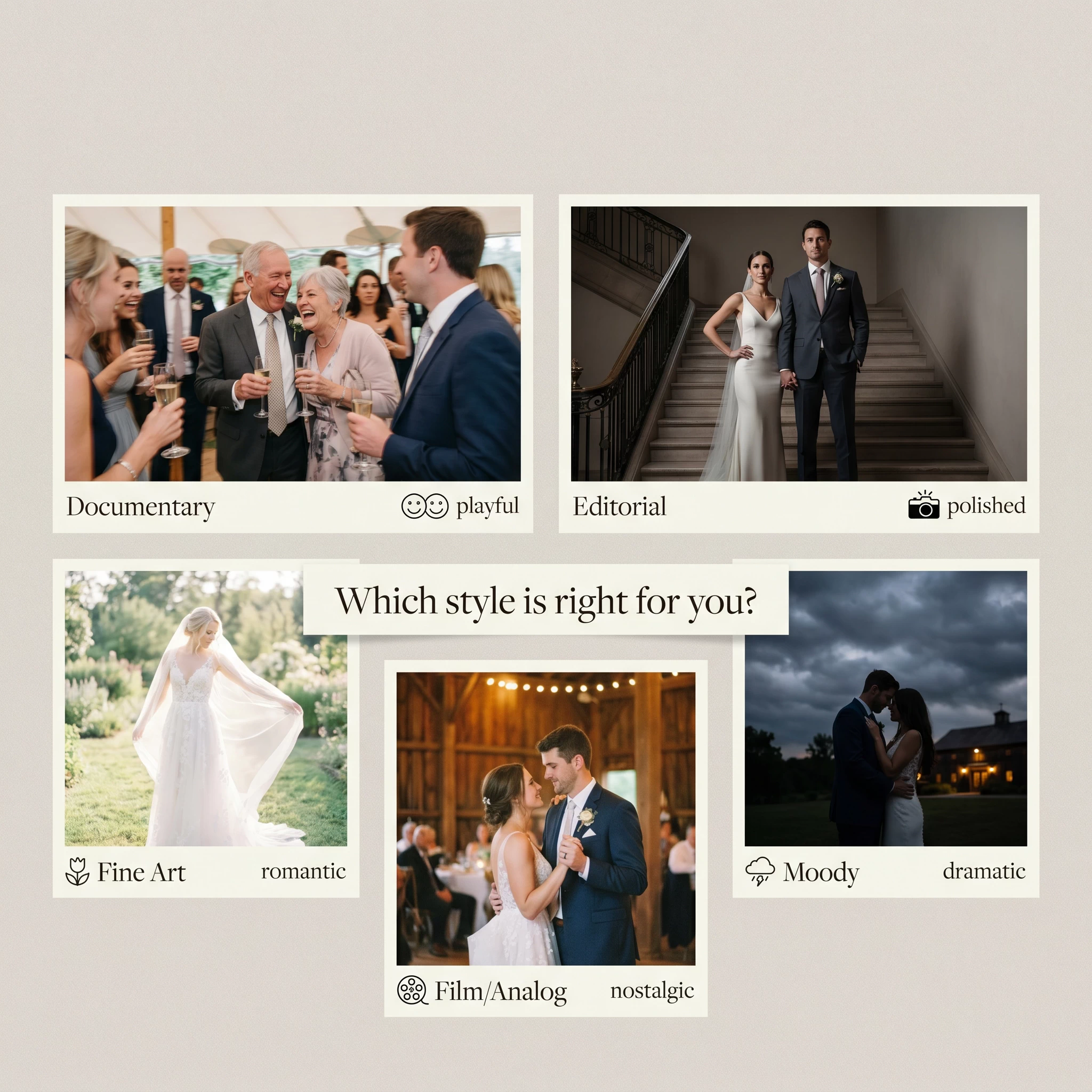
1. Documentary / Photojournalistic
The photographer captures real moments as they unfold — no posing, no direction, no staging. They’re a quiet presence watching the day.
- What the photos look like: candid, emotional, spontaneous. Guests laughing, tears during vows, the moment you see each other across the room. Imperfect in the best way.
- Best for: couples who feel stiff on camera and value emotional authenticity over technical perfection.
- Watch for: very few formal portraits in their portfolio. If posed family formals matter to you, clarify this upfront.
2. Editorial / Fashion-Inspired
The photographer directs you like a fashion shoot — deliberate poses, specific angles, close attention to light and composition. Every image is constructed.
- What the photos look like: magazine-quality. Elevated, polished, a designer-ad aesthetic with strong intentional framing.
- Best for: couples comfortable being directed who want images that feel high-fashion.
- Watch for: this style requires active participation. If being posed makes you self-conscious, it will show.
3. Fine Art
Photography treated as visual art. Heavy attention to light, colour palette, texture and composition. Often film or film-emulation digital.
- What the photos look like: dreamy, soft, cinematic. Muted tones, beautiful light, an almost painterly quality.
- Best for: couples who care deeply about aesthetics and want a cohesive visual story.
- Watch for: fine-art photographers have very specific signature looks — make sure their palette matches your vision before booking.
4. Traditional / Classic
The style most common before documentary photography became dominant. Formal portraits, group shots, structured coverage of key moments.
- What the photos look like: clear, well-lit, technically precise. Every important moment and family grouping captured formally.
- Best for: families who value complete documentation and formal portraits.
- Watch for: may not excel at candid moments between planned shots.
5. Bright and Airy
A post-processing aesthetic characterised by light, warm, soft tones — bright highlights, creamy whites, a sun-kissed feeling.
- What the photos look like: light, warm, summery. Everything glows.
- Best for: outdoor weddings with natural light; couples who prefer a warm, cheerful aesthetic.
- Watch for: can wash out darker skin tones if the photographer lacks experience with diverse clients. Always ask to see full galleries from similar weddings.
6. Dark and Moody
Rich shadows, deep contrast, dramatic colours, a cinematic feeling.
- What the photos look like: dramatic, romantic, intense. Deep blacks and jewel tones.
- Best for: couples who want bold imagery; historic venues; candlelit settings; dark florals and rich colour palettes.
- Watch for: can clash with a light, airy wedding aesthetic.
Most Photographers Blend Styles
Few photographers work in only one style. Most combine documentary candids with editorial portraits, then apply a fine-art or moody post-processing look. When you talk to photographers, always ask:
- “What percentage of your images are candid versus posed?”
- “How would you describe your editing style?”
- “Can I see a full gallery from a wedding similar to mine?” — the most important question
A highlight reel always looks great. A full gallery reveals consistency across an entire 8-hour day, including the less glamorous moments.
How to Find Your Style
Look at your wedding vision board with fresh eyes. Are the photos candid and emotional, or posed and editorial? Light and warm, or deep and dramatic? Then look at photographers’ full galleries — not homepage hero images — and notice how the couple looks when they’re not being directed, whether the light feels natural or manufactured, and whether the editing is consistent throughout. Our engagement photo ideas guide covers using the engagement session as a test-run with your photographer.
Matching Style to Your Venue and Season
Style doesn’t exist in isolation — it interacts with where and when you’re getting married:
- A dark, historic venue or a candlelit winter reception rewards a dark-and-moody or fine-art photographer and can look flat and grey in a bright-and-airy edit.
- A garden or beach wedding in summer is where bright-and-airy earns its name; a heavy moody edit can fight the setting.
- A modern, minimal venue pairs well with editorial — clean lines, strong composition, deliberate posing.
- A large family wedding with lots of relatives travelling in benefits from at least a traditional streak, so every grouping is documented properly, whatever the primary style.
If your venue and your favourite photographer’s style don’t match, look at whether they have galleries from a similar space before you assume it’ll work.
Key Questions Before You Book
- Have you shot at my venue, or a similar space?
- How do you handle family formals — do you direct them, or is that a coordinator’s role?
- Do you work with a second shooter, and does their style match yours?
- How long after the wedding will I receive the full gallery?
- What’s your backup plan if you’re ill on my wedding day?
Frequently Asked Questions
Which style is most popular?
Documentary combined with editorial portraits is the most common hybrid approach in 2026. Pure traditional photography is less requested than it was 15 years ago.
Does style affect price?
Yes — fine-art and editorial photographers typically charge more, reflecting higher post-processing time and a more selective client base. See our wedding photographer cost guide for the full picture.
Can I ask a photographer to shoot in a different style?
Photographers work best in their natural style. Choose one whose existing portfolio already looks like what you want — don’t try to change their approach.
How important is editing style vs. shooting style?
Both matter equally. Shoot beautifully, edit badly, and you’ll still dislike the results. Always judge the final delivered images, not just the raw compositions.
Finding the Right Match
The right photographer isn’t the most technically skilled — it’s the one whose vision matches yours and whose presence on the day feels comfortable rather than intrusive. Compare packages across candidates with the free Wedding Photography & Videography Package Guide.